Slow cookers are celebrated for their convenience and versatility, yet many home cooks underutilize them due to common misconceptions and missed opportunities (tomsguide.com). This article explores ten reasons why you might not be maximizing your slow cooker’s potential, offering insights to enhance your culinary experience (yahoo.com).
Unlock your slow cooker’s potential with diverse dishes beyond stews and soups.
Limiting your slow cooker usage to just stews and soups means missing out on its full potential. This versatile appliance can also prepare desserts like cakes and puddings, as well as international dishes. For instance, you can make a delicious coconut black rice pudding (thekitchn.com) or a moist mango cake in your slow cooker. Exploring these options can expand your culinary repertoire and make the most of your slow cooker’s capabilities.
Browning meat and aromatics enriches slow-cooked dishes with deeper, more complex flavors.
Browning meat and aromatics before adding them to the slow cooker enhances the depth and complexity of your dish’s flavor. This initial step caramelizes natural sugars, creating rich, savory notes that slow cooking alone cannot achieve. For example, a stew prepared without browning may lack the robust taste found in one where the ingredients are first seared. Incorporating this technique can significantly elevate your slow-cooked meals.
Ensure even cooking by filling your slow cooker between half and two-thirds full.
Improperly filling your slow cooker can lead to uneven cooking or spillage. To ensure optimal results, it’s recommended to fill your slow cooker between half and two-thirds full. This allows for even heat distribution and prevents overflow. Always refer to the manufacturer’s guidelines for specific capacity recommendations (goodhousekeeping.com).
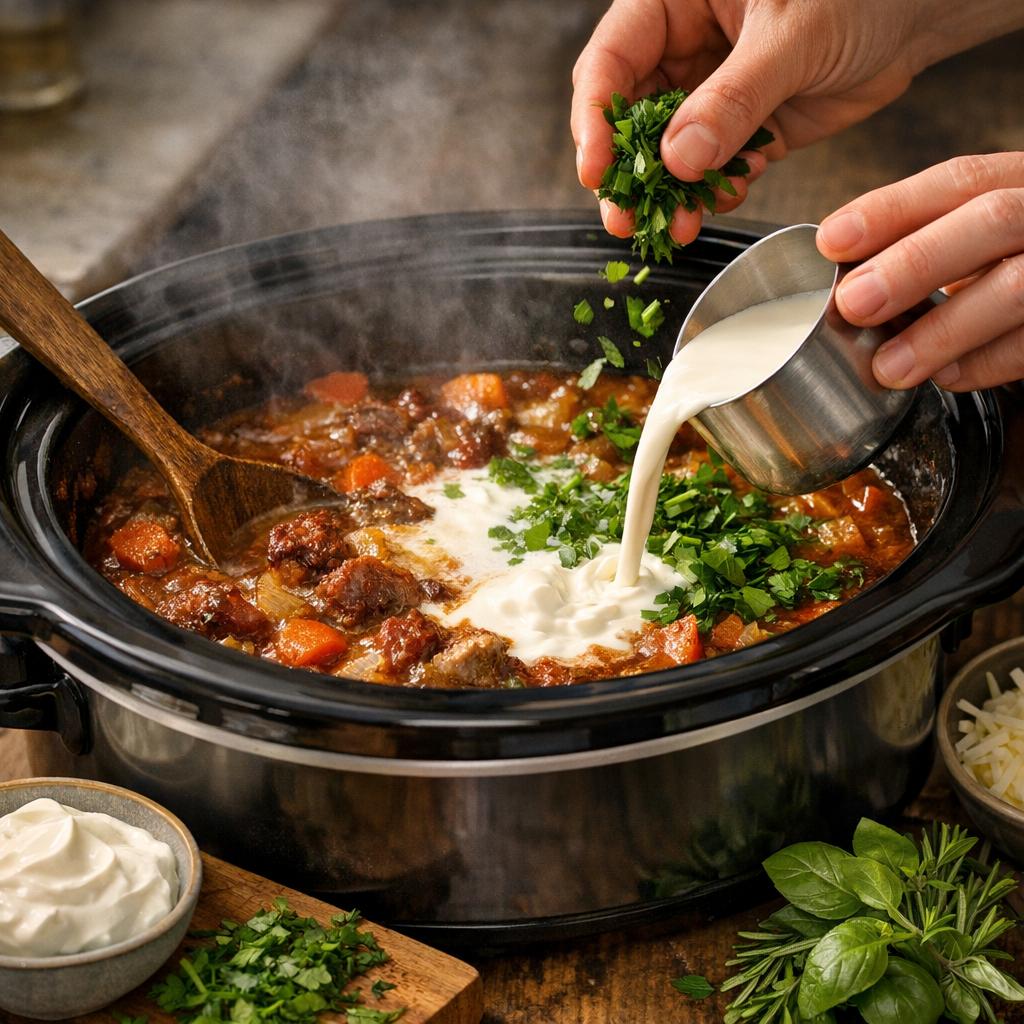
Add dairy and fresh herbs in the last 15 minutes for optimal flavor and texture.
Introducing dairy products or fresh herbs at the beginning of the slow cooking process can result in curdling or diminished flavor. To preserve their texture and taste, it’s advisable to add these ingredients during the final 15 minutes of cooking. This approach ensures that dairy remains smooth and herbs retain their vibrant aroma (foodnetwork.com).
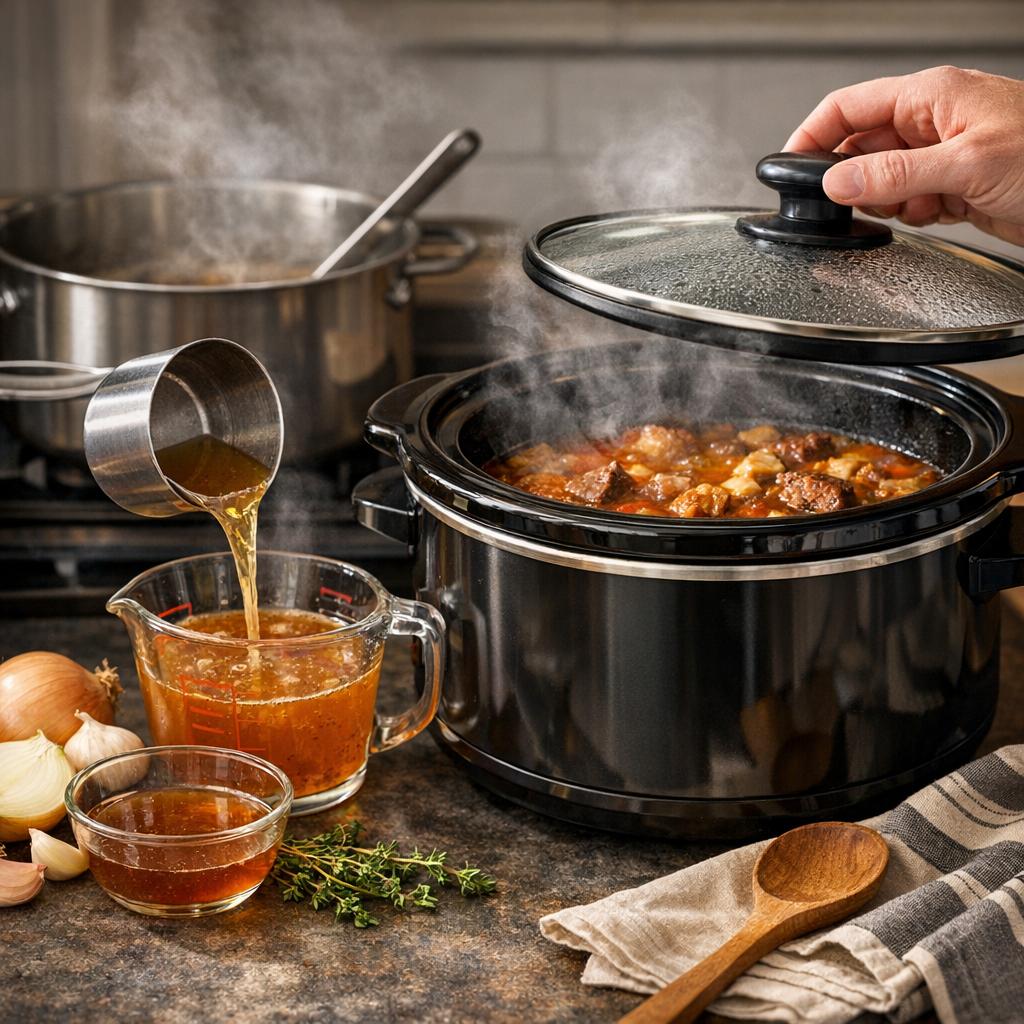
Maximize flavor and consistency in slow cooking by adjusting liquid amounts and avoiding lid lifts.
Slow cookers retain moisture and don’t allow liquids to evaporate as stovetop cooking does, which can result in watery dishes if standard recipes are followed without modification. To prevent this, reduce the amount of liquid in your recipes by about one-third when using a slow cooker. Additionally, avoid lifting the lid during cooking, as this releases heat and moisture, potentially affecting the consistency of your dish. For more tips on slow cooker usage, refer to this article from tasteofhome.com.
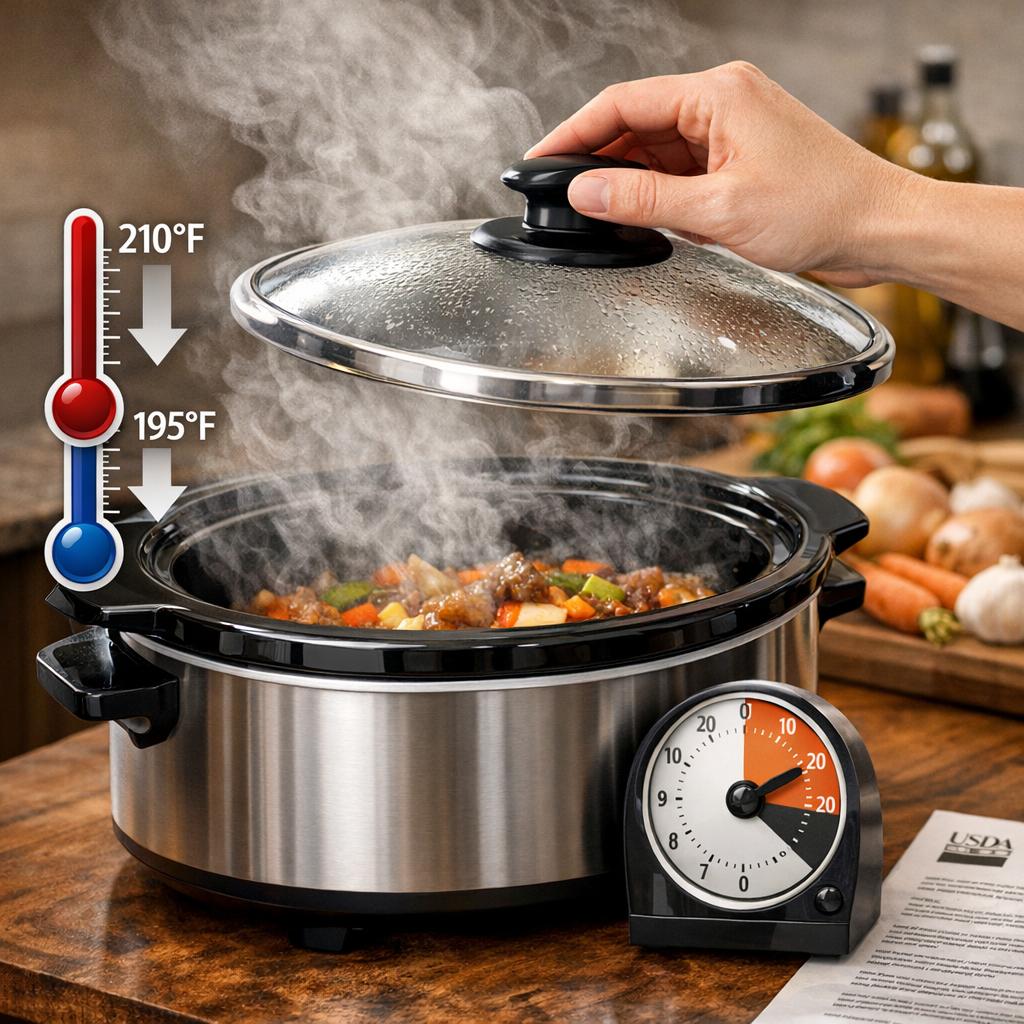
Avoid lifting the slow cooker lid to ensure even cooking and optimal temperature retention.
Opening the lid of your slow cooker during cooking releases heat and steam, causing the internal temperature to drop by 10 to 15 degrees Fahrenheit each time. This not only extends the cooking time by approximately 20 minutes but can also result in unevenly cooked food. To maintain optimal cooking conditions, avoid lifting the lid unless necessary. For more information on slow cooker safety, refer to usda.gov.
Enhance slow-cooked lean meats’ tenderness by adding moisture or choosing fattier cuts.
Cooking lean meats like pork tenderloin or chicken breasts in a slow cooker without modifications can result in dry, tough dishes. To prevent this, consider adding extra liquid or fat to maintain moisture. Alternatively, opt for cuts with higher fat content, such as pork shoulder or beef chuck roast, which remain tender and juicy during slow cooking. (bonappetit.com)
Layer vegetables by cooking time in a slow cooker for optimal texture and flavor.
Not all vegetables cook at the same rate in a slow cooker. Delicate vegetables like courgettes (zucchini) and tomatoes can become mushy if added too early, while hearty ones like carrots and potatoes benefit from longer cooking times. To prevent this, layer your slow cooker with the hardiest vegetables at the bottom, followed by those that require less cooking time. This method ensures even cooking and maintains the desired texture of each ingredient (bbcgoodfood.com).
Ensure safe thawing and reheating of foods to prevent foodborne illnesses.
Improperly thawed meats or reheating leftovers in a slow cooker can lead to foodborne illnesses. Always thaw frozen meats in the refrigerator, cold water, or microwave, never on the counter, to prevent bacterial growth. When reheating leftovers, ensure they reach an internal temperature of 165°F to kill harmful bacteria. For comprehensive guidelines on safe slow cooker usage, consult cdc.gov.
10. Forgetting to Clean and Maintain Your Slow Cooker
Proper maintenance of your slow cooker ensures optimal performance and prevents flavor contamination.
Neglecting regular cleaning and maintenance of your slow cooker can lead to flavor contamination between dishes and reduce the appliance’s lifespan. After each use, unplug the cooker and allow it to cool completely. Remove the stoneware insert and lid; these can typically be washed with hot, soapy water or placed in the dishwasher, depending on the manufacturer’s instructions. Avoid using abrasive cleaners or scouring pads to prevent damage. For the heating base, wipe it with a soft, damp cloth; never immerse it in water. To remove stubborn stains or odors, fill the insert with warm water, add a mixture of ½ cup baking soda and ½ cup distilled white vinegar, cover, and set to low for one hour. Afterward, allow it to cool, then rinse and dry thoroughly. Regular maintenance ensures your slow cooker remains in optimal condition, providing delicious meals for years to come. For more detailed cleaning tips, refer to consumerreports.org.
Unlock the full potential of your slow cooker with diverse recipes and safe preparation techniques.
By understanding and implementing these key practices—such as exploring diverse recipes, properly preparing ingredients, and adhering to safety guidelines—you can fully harness the potential of your slow cooker. Embrace thoughtful experimentation and refine your techniques to create a variety of flavorful and satisfying meals. For more insights and tips, consider exploring resources like the American Heart Association’s guide on slow cooking (heart.org).