13 Hands-Off Ways To Water Plants In Your Home And Garden

darren - March 13, 2026
Share

Maintaining consistent hydration for your plants can be challenging without daily attention. Fortunately, there are several hands-off watering techniques that simplify plant care, save time, and promote healthier growth. These methods are suitable for both indoor and outdoor environments, ensuring your plants receive the necessary moisture with minimal effort. In this article, we’ll explore 13 effective strategies to keep your plants thriving without the need for constant manual watering.

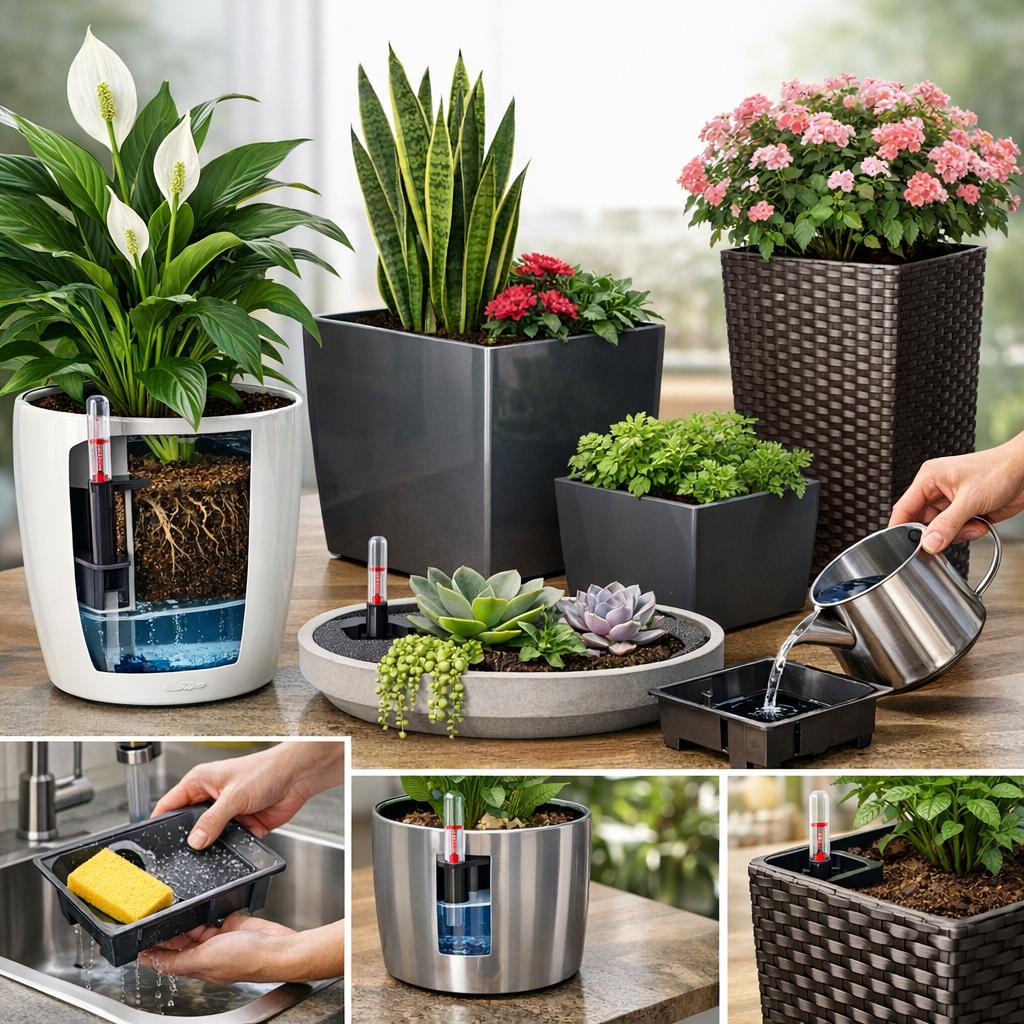
1. Self-Watering Planters

1. Self-Watering Planters
Self-watering planters ensure consistent moisture, perfect for busy lifestyles and diverse plant needs.

Self-watering planters feature built-in reservoirs that maintain consistent soil moisture, reducing the need for frequent watering. These planters come in various styles, such as those with wicking systems or capillary mats, catering to different plant types and aesthetic preferences. Ideal for busy individuals, they ensure plants receive adequate hydration even during hectic schedules. Brands like Lechuza offer high-quality self-watering planters. To maximize their effectiveness, it’s important to follow proper care guidelines, including regular cleaning and monitoring water levels.

2. Drip Irrigation Systems

2. Drip Irrigation Systems
Efficient drip irrigation optimizes water use, delivering moisture directly to plant roots.

Drip irrigation delivers water directly to the soil, minimizing waste and evaporation. This method is more efficient than traditional sprinkler systems, using 30-50% less water. Drip systems can be gravity-fed or timer-controlled, suitable for both indoor and outdoor applications. They are particularly effective for watering individual plants, shrubs, vegetables, and flower beds. By applying water directly to the root zone, drip irrigation reduces the risk of foliar diseases and promotes healthier plant growth (uga.edu).

3. Glass Water Globes

3. Glass Water Globes
Elegant glass water globes ensure consistent hydration for plants, perfect for busy lifestyles.

Glass water globes are decorative tools that slowly release water into the soil as it dries, providing a consistent moisture supply. They’re particularly suitable for small containers and are easy to use: fill the globe with water, insert it into the soil, and it will gradually hydrate the plant. This method is ideal for individuals with busy lifestyles, as it reduces the frequency of manual watering. For more information, visit House Beautiful’s article on watering globes (housebeautiful.com).

4. Wicking Systems

4. Wicking Systems
DIY wicking system ensures consistent moisture delivery to plants using nested buckets and fabric.

Wicking systems utilize cotton or synthetic ropes to draw water from a reservoir to a plant’s roots, ensuring consistent moisture. A simple DIY setup involves two nested buckets: the inner bucket holds the plant and soil, while the outer bucket serves as the water reservoir. Strips of cloth or nylon are threaded through holes in the inner bucket, with one end submerged in the reservoir and the other extending into the soil. This design allows the plant to absorb water as needed, making it ideal for extended absences. For detailed instructions, refer to Popular Science’s guide on building a self-watering planter (popsci.com).

5. Automatic Watering Stakes

5. Automatic Watering Stakes
Effortlessly maintain plant hydration with automatic watering stakes for consistent moisture control.

Automatic watering stakes are devices that regulate soil moisture by drawing water from a bottle or jug, providing consistent hydration to plants. These stakes are typically made of ceramic or plastic and are designed to slowly release water into the soil as it dries, reducing the need for frequent manual watering. They are particularly useful for houseplants, ensuring they receive adequate moisture during periods of absence or busy schedules. For more information, refer to Good Housekeeping’s article on the best plant watering stakes (goodhousekeeping.com).

6. Outdoor Soaker Hoses

6. Outdoor Soaker Hoses
Efficiently hydrate your garden with soaker hoses for even coverage and water conservation.

Outdoor soaker hoses are porous tubes that slowly release water along their length, providing even coverage in garden beds and conserving water compared to traditional sprinklers. To install, lay the hose along plant rows, connect it to a water source, and turn on the supply. For automated watering, integrate a timer to schedule consistent hydration. This setup is particularly beneficial for extended absences, ensuring plants receive adequate moisture. For more details, refer to Bob Vila’s guide on the best soaker hoses (bobvila.com).

7. Mulch Matting to Retain Moisture

7. Mulch Matting to Retain Moisture
Eco-friendly coir fiber mats enhance soil moisture retention while suppressing weeds in garden beds.

Mulch matting, such as coir fiber mats, effectively reduces soil evaporation, maintaining consistent moisture levels and decreasing watering frequency. These eco-friendly materials suppress weeds and improve soil health. Suitable for garden beds, they are easy to install and biodegradable, offering a sustainable solution for moisture retention. For more information, refer to Eco Depot Sales’ overview of mulch matting (ecodepotsales.com).

8. Plant Watering Spikes

8. Plant Watering Spikes
Sustainable plant watering spikes ensure gradual hydration, perfect for travelers and busy gardeners.

Plant watering spikes are devices that attach to recycled bottles, providing a sustainable and gradual watering solution for your plants. By inserting the spike into the soil and filling the bottle with water, the device slowly releases moisture as needed, ensuring consistent hydration. This method is particularly convenient for travelers, as it allows plants to be watered for extended periods without manual intervention. Setting up is straightforward: fill a compatible bottle with water, attach the spike, and insert it into the soil near the plant’s root zone. For more information, refer to Gardening Know How’s guide on watering houseplants when away (gardeningknowhow.com).

9. Capillary Matting

9. Capillary Matting
Capillary matting ensures consistent moisture levels, promoting healthy growth for potted plants.

Capillary matting is an absorbent material placed beneath plant pots, allowing soil to draw water as needed through capillary action. This method ensures consistent moisture levels, reducing the risk of overwatering or underwatering. It’s particularly beneficial for greenhouse benches or collections of potted plants, providing uniform hydration and promoting healthy growth. For more information, refer to the RHS’s guide on mulching (rhs.org.uk).

10. Timer-Controlled Sprinkler Systems

10. Timer-Controlled Sprinkler Systems
Efficient automated sprinkler systems with Wi-Fi control ensure optimal garden hydration from anywhere.

Automated sprinkler systems with programmable timers allow for scheduled watering at set intervals, ensuring consistent hydration for your garden. Many modern systems offer Wi-Fi connectivity, enabling remote control via smartphone apps. This feature is particularly beneficial for larger outdoor spaces, as it allows for easy adjustments and monitoring from anywhere. For instance, the Orbit B-Hyve Smart Wi-Fi Irrigation Controller offers such capabilities. Additionally, the RainPoint 2-Zone Wi-Fi Sprinkler Timer provides smart irrigation solutions with app control. These systems can be integrated with weather data to adjust watering schedules based on real-time conditions, promoting water conservation and optimal plant health (mozeve.com).

11. In-Ground Ollas

11. In-Ground Ollas
In-ground ollas efficiently deliver water to plants, conserving resources and enhancing growth.

In-ground ollas are unglazed, porous clay pots buried in soil, releasing water directly to plant roots through capillary action. This method conserves water by reducing evaporation and runoff, making it ideal for vegetable beds. Studies indicate that olla irrigation can save up to 70% of water compared to traditional methods. Additionally, ollas promote deeper root growth, enhancing plant resilience and yield (smartiliving.com).

12. Watering Cones with Reservoir Attachments

12. Watering Cones with Reservoir Attachments
Effortlessly sustain plant hydration with Hozelock’s Aquasolo watering cones and reservoir system.

Watering cones with reservoir attachments are devices that connect to plastic bottles, delivering water directly to plant roots with minimal user input. These cones are particularly useful for providing consistent hydration during long weekends away. For example, the Hozelock Aquasolo system includes ceramic cones that fit most plastic bottles, keeping plants watered for up to 28 days (hozelock.com).

13. Rain Barrels with Gravity-Fed Release

13. Rain Barrels with Gravity-Fed Release
Effortless irrigation: Elevate rain barrels for gravity-fed watering, conserving water and costs.

Connecting rain barrels to a hose or simple drip line provides hands-off watering from collected rainwater, promoting sustainability and savings. By elevating the barrel, gravity facilitates water flow, reducing the need for pumps. This method conserves potable water and offers a cost-effective irrigation solution. For more information, refer to the EPA’s guide on rain barrels (almanac.com).

Advertisement