Transforming a space in your home into a personal gym offers unparalleled convenience, cost savings, and the freedom to tailor workouts to your preferences. With a home gym, you can exercise on your schedule, eliminate commute times, and create an environment that motivates you. This personalized approach not only enhances your fitness routine but also promotes consistency and long-term health benefits (repfitness.com).
Compact dumbbell rack with adjustable weights enables versatile, space-saving strength training for any home gym.
Maximize your workout options with a compact dumbbell rack. Versatile and space-saving, it fits in any corner and allows for targeted strength training. Adjustable dumbbells offer flexibility, accommodating various exercises and resistance levels. Incorporating free weights into your routine can enhance muscle strength, improve bone density, and boost metabolism. For more information on the benefits of free weights, visit the Mayo Clinic’s article on weight training (mayoclinic.org).
Resistance bands offer full-body workouts without bulk or expense. They’re portable, easy to store, and suitable for all fitness levels. You can easily perform a variety of exercises without needing other specialised equipment. Your only limitation is your imagination. Explore routines for strength and flexibility. See expert guidance at Harvard Health.
Space-saving foldable exercise bench offers versatile workouts and easy storage for home fitness routines.
A foldable exercise bench allows for chest presses, step-ups, and more, and can be stored under a bed. Compared to traditional benches, foldable models are space-saving and versatile. Benches are required for many workouts and are very versatile. Discover bench workouts at Men’s Health.
Installable without hardware, doorway pull-up bars let you train back, arms, and core effectively. Weight capacities vary significantly; standard models support 250-300 lbs, while heavy-duty options can handle up to 440 lbs. Grip options include single, multi-grip, and neutral grips, allowing for varied exercises. For proper pull-up form, refer to expert guidance at Verywell Fit (verywellfit.com).
Dedicate a small area with a comfortable mat for yoga, Pilates, or stretching. Enhance with blocks or straps to support your practice. Compared to group classes, a home setup offers privacy and convenience, allowing you to practice at your own pace. For effective home yoga routines, refer to Yoga Journal’s guide on bringing your practice home (yogajournal.com).
Jump ropes provide high-intensity cardio at minimal cost and space. They can burn approximately 10-16 calories per minute, depending on speed and skill level. Weighted ropes offer an added challenge, engaging more muscle groups and enhancing endurance. Compared to treadmills, jump ropes are more portable and budget-friendly, requiring minimal space. For cardio tips, refer to the American Heart Association’s guidance on rope jumping for heart health (jacksonhealth.org).
Maximize floor space and organization with wall-mounted racks and hooks for gym equipment storage.
Utilize wall hooks, racks, or pegboards to store equipment neatly and free up floor space. For example, the XM Wall Mounted Multi-Purpose Storage Rack includes nine heavy-duty metal hooks, each holding up to 44 lbs, ideal for strength bands, jump ropes, and other accessories. Alternatively, the Synergee Barbell Gun Rack offers a horizontal wall-mount design to store up to three barbells, preserving your bar’s finish with protective plastic-lined brackets. For inspiration, HGTV showcases organized home gyms with various storage solutions (hgtv.com).
Kettlebells are compact and enable strength, power, and cardio moves. Adjustable models, such as the Bowflex SelectTech 840 Adjustable Kettlebell, allow you to switch weights quickly, offering a range from 8 to 40 pounds, and replace multiple kettlebells, saving space (workouthealthy.com). Kettlebells differ from dumbbells in that their center of mass extends beyond the hand, facilitating swinging movements and engaging more muscle groups.
Integrating an exercise ball into your home gym enhances core stability and functional movement training. These versatile tools can be easily stored or used as a desk chair, promoting better posture and reducing sedentary-related discomfort. For more information on the benefits of exercise balls, refer to the Cleveland Clinic’s article on birthing balls. (health.clevelandclinic.org)
Create a dedicated foam rolling area in your home gym to support muscle recovery and flexibility.
Dedicate a space in your home gym for foam rolling to aid muscle recovery and enhance flexibility. Foam rollers come in two primary types: smooth and textured. Smooth rollers provide even pressure, making them suitable for beginners or those with sensitive muscles. Textured rollers, featuring ridges and knobs, offer a deeper massage, effectively targeting muscle knots and tight spots (rei.com). For comprehensive recovery tips and techniques, refer to Healthline’s guide on foam rolling.
Maximize space with foldable cardio equipment for a convenient, efficient home workout station.
Position a compact treadmill, exercise bike, or rowing machine in an alcove to create an efficient cardio station. Foldable options, such as the Echelon Stride Auto-Fold Treadmill, which folds to just 10 inches thick, maximize space without sacrificing functionality. Compared to gym machines, home cardio equipment offers the convenience of exercising on your schedule and eliminates commute time, making it a practical choice for many (fitnesstown.ca).
Sleek frameless mirrors enhance home gyms by improving form visibility and creating a spacious atmosphere.
Installing mirrors in your home gym allows you to monitor your exercise form and creates the illusion of a larger space. Even a single portable mirror can be effective. For example, the Better Bevel Frameless Mirror offers a clear reflection and a sleek design, making it a popular choice for home gyms (wellfitinsider.com).
Enhance your home gym with smart fitness devices such as speakers, trackers, or interactive displays to guide and record workouts. For instance, the Peloton Bike+ offers live and on-demand classes with real-time performance metrics, while the Fitbit Charge 5 provides heart rate monitoring and GPS tracking. Basic trackers offer essential metrics, whereas advanced equipment provides comprehensive data and interactive features. Explore top fitness tech options to find the best fit for your needs.
Wall-mounted racks and upright holders keep yoga mats organized, maximizing space in compact areas.
Utilize upright holders or wall-mounted racks to store yoga and fitness mats, effectively reducing floor clutter. This approach is particularly beneficial in small spaces, as it frees up valuable area while keeping your equipment organized and easily accessible. For instance, wall-mounted racks can hold multiple mats vertically, saving space and providing a tidy appearance. Alternatively, using a sturdy wall hook to hang a rolled-up mat can also be an effective solution (astage-global.com). When choosing a storage method, consider the size and weight of your mats, as well as the available wall space, to select the most suitable option for your home gym.
Maximize small-space fitness storage with low-profile, wheeled under-bed bins for organized workout gear.
Utilize under-bed bins or drawers to store bands, sliders, and small weights, keeping your space tidy. This approach is particularly beneficial in apartments where floor space is limited. Low-profile rolling bins can slide effortlessly under beds, providing perfect storage for yoga mats, foam rollers, and blocks. Choose wheeled containers with pull handles for easy access during your morning routine. Alternatively, under-bed storage drawers can be custom-built or purchased to fit neatly under your bed, making them invisible when not in use (mefitox.com). This method effectively utilizes otherwise wasted space, keeping your fitness equipment organized and easily accessible.
Dedicated home gym space for bodyweight exercises promotes strength, endurance, and overall fitness.
Allocate a clear floor area in your home gym for bodyweight exercises such as push-ups, planks, and high-intensity interval training (HIIT) sessions. These exercises require no equipment and effectively build strength and endurance. For instance, push-ups target the chest, shoulders, and triceps, while planks engage the core and back muscles. Incorporating bodyweight exercises into your routine offers benefits like improved cardiovascular health, increased muscle mass, and enhanced flexibility (healthline.com).
Invigorate your home gym with bold colors, motivational art, adjustable lighting, and strategic mirrors.
Enhance your home gym by incorporating motivational posters, vibrant colors, and adjustable lighting to energize your workout space. Bright lighting stimulates serotonin production, elevating mood and focus, while warm lighting promotes relaxation post-exercise. For instance, a bold, vibrant space can make all the difference in setting the right tone (architecturaldigest.com). Additionally, incorporating mirrors can enhance natural light and provide visual feedback on form, making the space feel larger and more open.
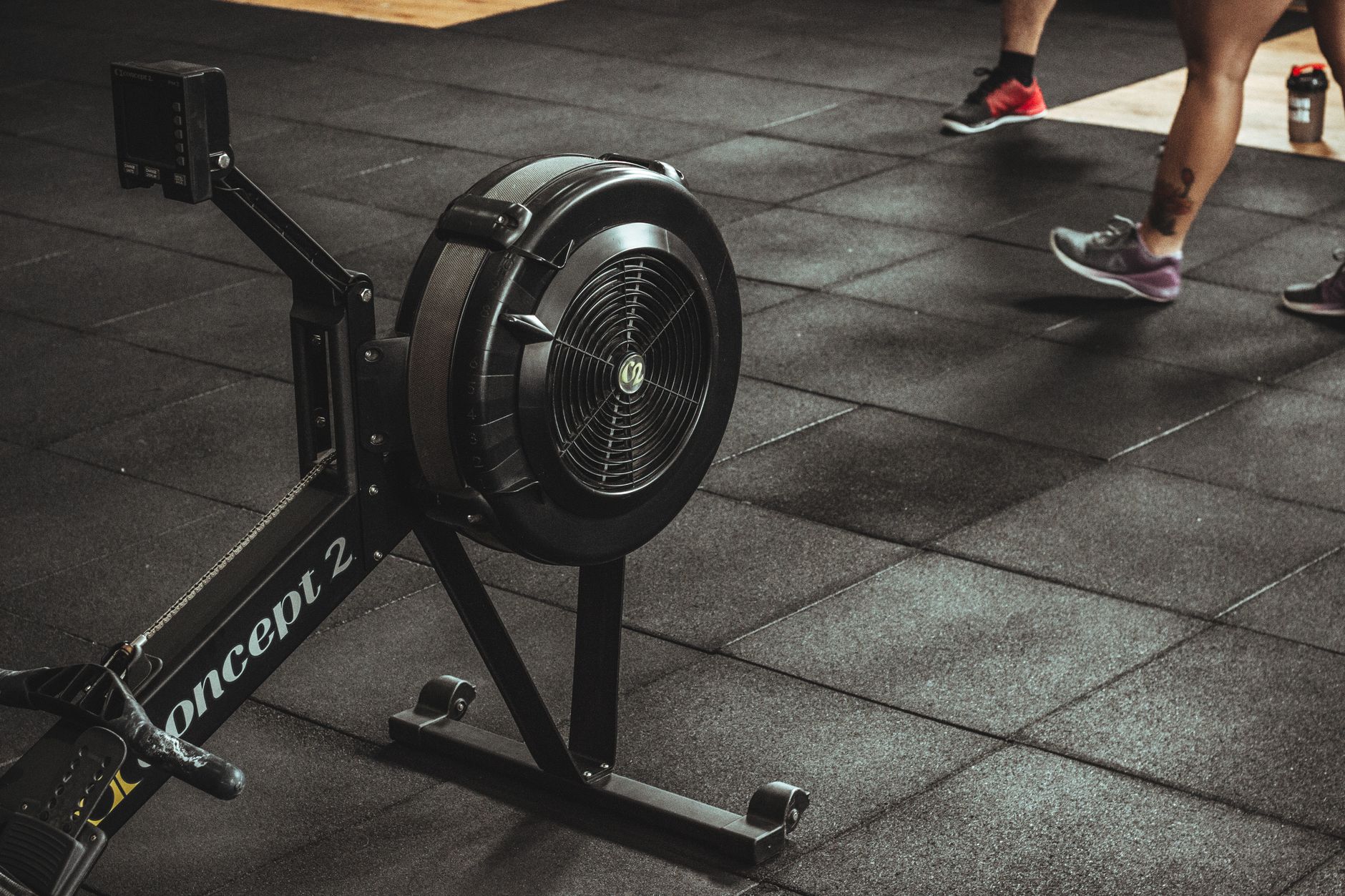
A foldable or upright rowing machine offers low-impact, full-body cardio in a small footprint, making it ideal for home use. For instance, the Hydrow Wave Rower is 30% smaller than its predecessor, measuring 80 inches by 19 inches, and can be stored upright to save space. Similarly, the Peloton Row features a sleek design and can be stored upright, making it suitable for smaller spaces (womenshealthmag.com). When choosing a rowing machine for home use, consider factors such as size, storage options, and the type of resistance system to find the best fit for your space and fitness goals.
Compact aerobic step platform offers versatile workouts and convenient storage, perfect for limited spaces.
A sturdy step platform enables aerobic and strength exercises, then stacks away to save space. For example, the Fitvids 18″ Aerobic Step Platform is lightweight and portable, making it ideal for small spaces. In contrast, larger aerobic platforms require more room and may be less convenient for storage. For step workout examples, refer to SELF’s guide on the best step workout equipment (self.com).
Printable workout charts offer a clear, organized way to monitor and personalize your fitness progress.
Enhance your home gym by incorporating printable workout charts to track progress and stay motivated. These charts provide a visual representation of your fitness routine, helping you monitor exercises, sets, reps, and rest periods. For example, the Exercise Chart Template from Vertex42 allows you to create a personalized workout plan, including details like exercise type, sets, reps, and rest time. Comparing digital apps to hard-copy tracking, both methods have their advantages. Digital apps often offer interactive features, progress analytics, and portability, allowing you to access your workout data on various devices. However, hard-copy charts can be more tangible and may help some individuals stay more engaged with their fitness routine. Ultimately, the choice between digital and physical tracking depends on personal preference and which method better supports your fitness goals (printablesfree.org).
Implementing these accessible home gym ideas can seamlessly integrate fitness into your daily routine, eliminating common barriers to regular exercise. By creating a personalized and convenient workout space, you foster sustainable fitness habits that support long-term health and well-being. Embracing these strategies empowers you to take control of your fitness journey, ensuring consistency and motivation in achieving your health goals (fitnessgallery.com).